Philanthropy Ohio comments on proposed regulations
On Monday, Philanthropy Ohio submitted the following comments in response to Notice 2017-73 that addresses the use of donor advised funds (DAFs), on behalf of our 48 community foundation members.
Philanthropy Ohio is a statewide membership association serving private and community foundations, corporate giving programs, government agencies, United Ways and other public charity grantmakers as well as individual philanthropists. Our mission is to be the leading voice and premier resource for philanthropy across the state, particularly serving our over 220 members who collectively awarded more than $4 billion in grants last year. We provide the network, tools and knowledge to help people engaged in philanthropy become more effective, powerful changes agents in their communities.
Community foundations are a vital part of Ohio’s philanthropic landscape; we have the second highest number of any state (67 active, stand-alone foundations) and are third in giving ($515 million in 2015). As you might expect, donor advised funds are important, growing vehicles for our community foundations. About two-thirds of Ohio’s community foundations have DAFS, including small foundations serving rural communities as well as the largest grantmakers serving major cities. Recently completed research demonstrates the popularity and power of DAFs in our community foundations: the 10 largest community foundations have 3,345 DAFs that collectively hold $1.1 billion in assets and granted $184.5 million, representing an average payout of 11.6 percent (source: 2015/16 990s).

We see first-hand the impact that these foundations have in their communities, bringing local social and financial capital to address critical problems. These charitable endowments provide countless opportunities and numerous vehicles (including DAFs) for new and seasoned philanthropists to give back to their communities and make smart decisions about their charitable giving.
For many years, Philanthropy Ohio has advocated for policies that: encourage charitable giving; give donors the widest possible choice of vehicles for giving; and simplify the processes related to giving, at both the state and federal levels. Given the recently passed federal tax reform bill and its potential impact on charitable giving, we believe it is more important than ever that federal rules, regulations and tax laws make charitable giving easier rather than more complex and harder. It is from these values and vantage point that we offer comments related to the operations of DAFs as outlined in the Notice. We believe that minus evidence of widespread abuse related to any of the proposed topics addressed in the Notice that any guidance should have as its goal making the use and operation of DAFs easier and less complex for both donors and sponsoring organizations.
Section 3: Certain distributions from a DAF providing a more than incidental benefit to a donor, donor advisor or related person
We believe that the rules that apply to charitable deductions allowed for individual taxpayers should be mirrored in those for DAFs. An individual taxpayer may claim a charitable deduction for the portion of an event ticket or sponsorship for which no value or benefit is received, based upon the charity’s estimate of the value of those benefits. Current law and regulations do not prohibit such bifurcation and community foundation practice varies on this topic as some continue to bifurcate in such situations. Community foundation staff have and demonstrate the requisite skills and knowledge to accurately implement bifurcation, indeed helping donors comply at a higher rate, we suspect, than do individual taxpayers making similar charitable contributions. Further, there is nothing that states a legislative intent that DAFs and individuals by treated differently. For these reasons, Philanthropy Ohio requests the IRS and Treasury Department to reconsider the proposed guidance and accept the regulations and laws already in place that allow bifurcation.
Section 4: Certain distributions from a DAF permitted without regard to a charitable pledge made by a donor, donor advisor or related person

We appreciate the IRS proposal that distributions from a DAF to a charity that fulfill a pledge would not result in a more than incidental benefit to the donor/advisor but are troubled by the provision that makes it such only if the sponsoring organization makes no reference to the existence of the pledge when distributing the gift to the charity. We believe that this “don’t reveal” safe harbor for such distributions runs counter to our values – and those of our members – around transparency and accountability as we urge the adoption of best practices and credentialing. We also share our concern about the administrative burden the proposal places on charities that are charged with determining the legal enforceability of a pledge; we see that our community foundations’ practice is mixed and confused in the current environment and doubt that charities would be better equipped to make such determinations. For these reasons, Philanthropy Ohio asks the IRS and Treasury Department to adopt a regulation that explicitly permits the pledge of a donor/advisor to be paid from a DAF without further language about enforceability or lack of reference to the pledge during distribution.
Section 5: Preventing attempts to use a DAF to avoid public support limitations
We are not aware of instances where DAFs are being used to avoid public support limitations and believe that the proposed regulations would impose burdensome administrative requirements that far exceed the perceived problem. DAFs are public charities and grants from them should continue to be treated as public support, without any required attribution or aggregation and without any erosion of their public charity status. There is a perception perhaps on the part of the IRS that donors/advisors improperly control DAFs, a perception that is not supported by the practices and policies community foundations put in place to govern the operation of the funds and the foundation. Philanthropy Ohio opposes the proposed regulations and hopes that any regulations, if adopted, would provide relief from administrative burdens of sponsoring organizations and grantees.
Section 6: How private foundations use DAFs in support of their purposes

Our research into this area surfaced only a handful of examples of private foundations using DAFs at community foundations. In these cases, the private foundations used the funds to achieve a number of purposes related to their mission and, in most cases, the sponsoring organization imposed either formal policies or informal practices about required distributions, with disbursements occurring as early as 3 months from the date of the contribution. About one-third of Ohio’s community foundations comply with National Standards for Community Foundations, which include requiring adoption of best practice policies to address inactive DAFs, and many more are actively seeking such compliance. While we understand IRS concern about the potential for private foundations to use DAFs to avoid payout requirements and retain control over funds, this does not appear to be supported by the evidence. Philanthropy Ohio opposes any new regulations that would exclude DAF contributions from a private foundation’s qualifying distributions and suggest any new regulation be carefully crafted to stop any bad practice without limiting DAF use for genuine charitable purpose.
Claudia Y.W. Herrold
Why racial equity?
 Philanthropy Ohio has adopted diversity, equity and inclusion (DEI) as a core value, declaring:
We believe that greater diversity, equity and inclusion is a matter of fairness and effectiveness in our profession. To have real impact in a diverse and complex world, organized philanthropy must effectively include these voices and draw upon them to intentionally engage issues of diversity, equity and inclusion in an authentic way. We encourage all foundation leaders to sustain leadership commitment, authorization, learning and outreach and strategically and intentionally advance diversity, equity and inclusion in our organizations and grantmaking.
As an organization, we acknowledge all issues of equity – gender equity, economic equity, health equity, etc. – are of importance and have decided to lead with racial equity and address its intersectionality with other forms of equity.
We recognize that our members may fall along a spectrum on the path to addressing racial equity, from Awareness of Inequity through Understanding Why Inequity Exists to Transforming Toward Equity (see chart below from Forward Through Ferguson).
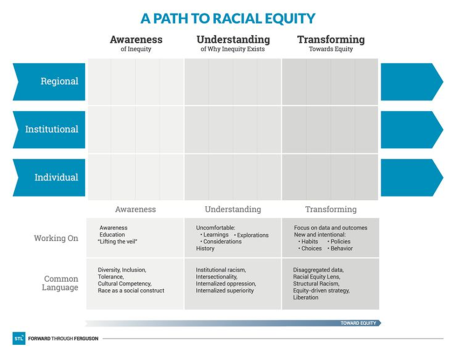
We place our current equity programming between the Awareness and the Understanding positions: to be Aware of race as a social construct and to understand why inequity exists.
At Philanthropy Forward ’17 last October, Dr. Eddie S. Glaude Jr. (Chair, Center for African American Studies at Princeton University) gave our keynote address, “The Value Gap,” which refers to the values that contribute to institutional racism – that white people are valued more than others are. He challenged philanthropy to be in a continual “crisis of racial awareness” as we do our work: to understand what some have to deal with every single day and to confront the ugliness of our history and how we got to now.
The learning, explorations and considerations that are part of the Understanding position can be uncomfortable and we need to lean into that discomfort. To quote Tamara Copeland, Washington Regional Association of Grantmakers president, “Racism cannot be explored in sound bites. There is a depth and breadth to the topic that requires that you listen, reflect, talk with others and then sit with the information for a while to make it your own. It is hard work to truly understand racism.”
Philanthropy Ohio is offering workshops and discussions that will further our individual and collective journeys from awareness through understanding to transformation. We are asking our members, as they engage in this work to reflect on what they are sitting with at any moment – be it hope, apprehension, discomfort or encouragement. And be open to having honest and courageous conversations with peers and in our communities. It is imperative that together we consider if and how philanthropy can shift.


Putting Racism on the Table, developed by the Washington Regional Association of Grantmakers, is a six-part video and discussion series examining how race-based preconceptions and actions – whether conscious or unconscious – can shape the effectiveness of philanthropy committed to issues as varied as education, housing, the arts or health care. The series has two cohorts, one for philanthropy CEOs and trustees and the other for program and other staff. The series runs February through July in Cleveland and May through October in Cincinnati with the Central Ohio series yet to be set.
Putting Racism on the Table for Program & Other Staff – May 14
Putting Racism on the Table for CEOs & Trustees – May 14
The Racial Equity Institute’s Groundwater and Phase I trainings are intensive presentations on historical, institutional and systemic racism challenging deeply-held assumptions and revealing the devastating impacts of persistent racial inequality on our nation’s most marginalized populations. According to the Racial Equity Institute, race remains an important indicator of well-being in U.S. society. When other factors, cited as the probable reasons for health or social problems (e.g., income, education, parent involvement, access to health insurance, etc.), are controlled for by statistical analyses, race remains an important, independent predictor of health, social, education, criminal justice and other outcomes.
Participating in these learning opportunities can help prepare philanthropy to be a platform for societal change that goes well beyond financial support.
Racial Equity Workshop – Phase I – May 3 – 4
Racial Equity Workshop – Phase I – May 7 – 8
In order to move to Transforming Towards Equity, we must embrace Dr. Glaude’s challenge to change the frame and invest in the solutions and not the problems. He asserts that we must understand that what we are doing is not charity; it is justice work. And we must not believe that equality is something we have to give.
Deborah Aubert Thomas
February 23, 2018 at 12:38 pm Philanthropy Ohio Leave a comment
How will the new tax law impact the nonprofit sector?
As the dust settles and we plan our work for 2018, many in the nonprofit sector – funders and grantees alike – are wondering just what the recently-passed tax reform bill will mean for them. It’s a mixed bag of impacts, both potential and certain. Here’s what we know and what we don’t know but anticipate.
First, the Tax Cuts and Jobs Act did NOT repeal the Johnson Amendment. The law, in place since 1954, prohibits nonprofits from political campaigning; nonprofits can neither contribute to nor endorse candidates for any elected office. Philanthropy Ohio thinks this is a good thing and opposes its weakening and repeal. There are still bills in Congress aimed at repeal, so the sector needs to keep a close eye on those. HR 781, the Free Speech Fairness Act, has 61 co-sponsors including Ohio Representatives Jordan and Renacci and its companion bill, S 264, has 5 sponsors.
Noteworthy among other provisions of the Tax Cuts and Jobs Act is one that will assess a 21 percent excise tax on compensation at nonprofits paying staff $1 million or more. Our colleagues at Clark Schaefer Hackett have a good article that explains the details of this provision, along with the tax on college investment income.
The tax law doubles the standard deduction, which means many current itemizers – projected as high as 95% – will stop itemizing deductions and claim the standard, especially since the deduction for state and local taxes was limited. This will likely impact charitable giving but it’s uncertain at what level. Estimates of projected decreases in giving range in the billions; a study by the Lilly Family School of Philanthropy and Independent Sector pegs the range of potential impact at $4.9 to $13 billion. The Tax Policy Center’s analysis puts the number at the high end; it looked at impacts on various income levels and concluded “the new law is likely to reduce charitable giving by somewhere in the neighborhood of 5 percent. And those gifts will come from fewer—and richer—givers.”

We also know that donors at the higher end of the income spectrum are more likely to give their charitable contributions to arts and culture organizations as well as colleges and universities, while those with middle and lower incomes tend to support organizations providing safety net services – food pantries, homeless shelters and the like. Accordingly, it may be that the tax law disproportionately affects donations to human service organizations.

Here in Ohio, about one-quarter of taxpayers have historically claimed charitable contributions as itemized deductions. In 2015, the latest year for which we have IRS data, 1.1 million Ohioans claimed gifts totaling $5.85 billion, gifts that went to all kinds of nonprofits across the state, nation and world. Ninety-five percent of our state’s itemizers were responsible for over $3 billion in charitable donations; that is a big chunk of money that’s potentially at risk. While we don’t believe that tax policy creates a charitable intent, it does influence the timing, amount and form of gifts. This was clear just this past year, as described in a Chronicle of Philanthropy article that showed online donors gave 38 percent more to charity and made 18 percent more gifts during the last week of 2017 than in the final week of 2016, with 61,000 donations totaling over $14 million given on New Year’s Eve alone.
How can foundations and grantees prepare for the uncertainty posed to their fundraising? One piece of advice: without the artificial deadline of December 31 for tax purposes, resource development, annual giving campaigns and crowdfunding activities need to be planned now and implemented earlier. And, given the proclivity of millennials and others toward online giving, nonprofits need to up their game using social media and technology.

The sector also should ramp up its advocacy activity to lobby for the creation of a universal deduction for charitable gifts. We lobbied long and hard for its conclusion in the tax reform bill, without success, and will renew our efforts this spring when we visit Washington for Foundations on the Hill.
Additionally, we’ll be asking our Ohio delegation to extend and expand the IRA Charitable Rollover, which could open new sources of donations by allowing those aged 59 ½ and over to contribute assets tax-free and by including donor advised funds as eligible recipients. These provisions could offset – at least partially – the anticipated drop in charitable contributions, continuing the strong American tradition of giving by individuals to help neighbors and by foundations to invest in addressing critical community needs.
Claudia Y.W. Herrold
January 22, 2018 at 12:21 pm Philanthropy Ohio Leave a comment
10 ways to get the most from your Philanthropy Ohio membership
Your membership in Ohio’s statewide philanthropic network presents great ways to enhance your professional development and further your career:
1. Extend your learning by attending programs in person or from the comfort of your office and by reading the latest and best resources.
2. Engage in policy reform work by participating in our Education or Health Initiatives.
3. Seek advice and tips from your peers, posting to one of our funder-specific listservs.
4. Request a speaker on the latest philanthropy data and trends.
5. Submit an information request or request a sample document.
6. Volunteer for a committee.


7. Share news about your organization, for inclusion online and in newsletters.
8. Get free advice from our Lawyer on Call, an expert in foundation law.
9. Write a guest blog on a current philanthropic topic or project at your organization.
10. Connect via social media on Facebook, Twitter and YouTube.
Claudia Y.W. Herrold
January 10, 2018 at 10:12 am Philanthropy Ohio Leave a comment
Implications of tax reform bill
As the dust settles on the tax reform bill, I wanted to point out key provisions that will likely impact community foundations and other public charity grantmakers and suggest that you consider amplifying your end-of-year appeals in the face of anticipated losses next year.
Briefly, doubling the standard deduction and eliminating or reducing other credits and deductions is projected to result in 95% of current itemizers no longer using that schedule. In Ohio, based on 2015 data provided by 1.5 million itemizers with charitable deductions, that means $3.8 billion of total $5.5 billion given by individuals (not via bequests) is at risk.
 What does this mean for your organization and those you support? We don’t know for sure but we do know that tax policy plays a major incentive for charitable giving and are afraid of how those donations might fall. Additionally, the exemption from the federal estate tax was doubled to about $22 million for couples.
A few of our members have asked today about how to position their organization for planned or special appeals before the end of the year, beyond sending the message of “send more money now.”
Pointing out that this may be the last year for which most donors will have the tax incentive to give, you might suggest that they use their IRA assets (if they are 70 ½ or older) and/or that they consider making a one-time substantial gift.
 Three positive items to note: the Johnson Amendment stands, prohibiting political activity by nonprofits; no changes were made to donor advised funds; and donors can receive a tax deduction for cash gifts of up to 60% of their adjusted gross income, up from the current 50% limit.
As we look to next year, we’ll be heading to Washington D.C. for Foundations on the Hill, where we will talk about a number of ways to mitigate the damage to charitable giving that we anticipate:
- Allow IRA assets to be given to donor advised funds;
- Decrease the IRA charitable rollover age to 59 ½; and
- Create an above the line, universal deduction for charitable gifts.
It will be a critical year, please consider joining your philanthropy colleagues from across the country on March 12 – 14 for Foundations on the Hill.
Claudia Y.W. Herrold
December 20, 2017 at 3:43 pm Philanthropy Ohio Leave a comment
New trustees join the Philanthropy Ohio board
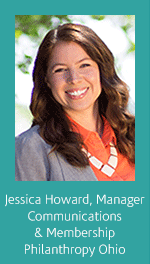 At the Philanthropy Ohio annual meeting on October 5, members elected five philanthropy leaders to serve an initial three-year term on the Board of Trustees beginning in January. We’re thrilled to welcome these new members to the board. Read their bios below.
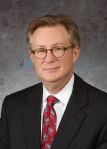 Keith Burwell has led the Toledo Community Foundation since 2004, where he oversees an annual grants program averaging $14 million. As a catalyst and convener, he brings the foundation’s voice and resources to critical community issues. Keith has served on Philanthropy Ohio’s Public Policy, Annual Conference and Community Foundation Committees. He has a master’s degree from Southwestern Baptist Theological Seminary and a bachelor’s degree from Campbell University.
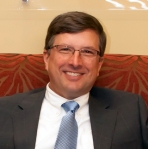 Brady Groves has served as president of the Richland County Foundation since 2011 where he has helped create a five-year economic development investment strategy, developed a nonprofit capacity-building academy and worked to change the foundation’s paradigm of responsive grantmaker to a system of social capital and impact. He co-chairs the Member Services Committee and has served on the Annual Conference Committee. Brady earned his MBA from Ashland University and a bachelor’s degree in business administration from Bowling Green State University.
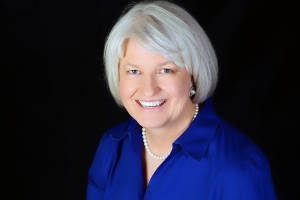 Margaret R. Hulbert serves as vice president, strategic resources & public policy, for United Way of Greater Cincinnati where she directs a team to develop effective funding partnerships for health, human services and community development needs in Southwestern Ohio and Northern Kentucky. She serves on Philanthropy Ohio’s Public Policy and Education Advisory Committees. Margaret holds a bachelor’s degree in English and political science from Macalester College and did postgraduate work in college administration at Indiana University.
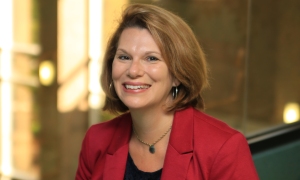 Lissy Rand serves as vice president, grantmaking & strategy, for Deaconess Foundation, which she joined in 2014 after nearly 10 years with Foundation Management Services in Cleveland where she served as program officer for five client foundations. She is a graduate of Northwestern University and received a Master of Social Work degree from University of Michigan and a Master of Public Health degree from University of Illinois.
 Karen White is the senior vice president and senior program officer, corporate philanthropy, for KeyBank where she manages a grant portfolio of nearly $40 million. In Northeast Ohio, Karen manages strategic grantmaking for the foundation in the areas of arts and culture and community economic impact in addition to leading the bank’s national signature volunteer program and strategic grantmaking in the Great Lakes and Western Pennsylvania regions. She is a graduate of Sawyer College of Business.
Also at the annual meeting, we recognized two outstanding volunteers who are leaving the board this year.
 Mary Sobecki, executive director of the Needmor Fund, joined the board in 2008. Bringing her wit and wisdom to the boardroom, Mary over the past 9 years served on many committees, including: annual conference, strategic planning, public policy, diversity, equity and inclusion and numerous affinity groups.
 Melissa Kleptz, executive director of the Troy Foundation, has served faithfully on the board since 2009. Melissa has brought her energy and expertise to a variety of areas, with service on governance, executive, public policy, Ohio Philanthropy Award Selection, community foundations and strategic planning committees, and she chaired the board of trustees for two years. She undoubtedly has left her mark on our organization with her steadfast leadership, integrity and insight.
We’re looking forward to 2018 and a new year of leadership, learning, growth and progress.

Jessica Howard
December 18, 2017 at 5:00 pm Philanthropy Ohio Leave a comment
Charitable giving is at risk
Tomorrow is Giving Tuesday, a day when charities across the country raise the money that sustains their efforts to help those most in need – whether that need is for a college education or workforce training, for food and a safe place to sleep, for addiction treatment or for dental care. If Congress has its way, those charities are going to be in a world of hurt as the charitable deduction so many charities rely on to spur donations comes to an effective end if the tax reform bill passes in its current form.
The Tax Cuts and Jobs Act eliminates a number of deductions and credits while doubling the standard deduction, a move that is intended to both simplify tax returns and lower the amount of taxes owed – at least for some individuals. While the bill keeps the charitable deduction – which has existed for 100 years – many fewer individuals will choose to itemize since they would lose other deductions and credits – like those for tuition, medical expenses and payment of state and local taxes. National estimates project that 95% of taxpayers who currently itemize their deductions (including the charitable deduction) will no longer do so once the other deductions and credits are deleted. A study by the Tax Policy Center estimates that charities would lose between $12 and $18 billion next year because of the tax bill’s effective elimination of the charitable incentive for donating to nonprofits. Here in Ohio, that 95% gave almost $4 billion in 2015, an amount that would be at risk of dramatically decreasing if the incentive for giving goes away. And, not only would thousands of charities and those they serve be impacted by such a reduction, so would Ohio’s economy, since almost 12% of the workforce is employed by a nonprofit.

There is a way to offset – at least partially – this anticipated decrease: create a universal deduction for gifts to charity, similar to the deduction enacted in the 1980s. In fact, HR 3988 proposes doing so, allowing all Americans to deduct their charitable donations without itemizing. We call upon Senators Portman and Brown to offer this as an amendment as the bill moves to the Senate floor.

It is critical to recognize that philanthropy cannot fill the needs – here in Ohio or nationwide – created as a result of the many provisions negatively impacting charitable giving and low- and middle-income workers and families. Ohio’s foundations, United Ways and other public charities gave over $2 billion to nonprofits in 2015, the highest on record, but it’s insufficient to fill anticipated gaps if the tax reform bill passes in its current form.
Claudia Y.W. Herrold
November 27, 2017 at 11:20 am Philanthropy Ohio Leave a comment
Open letter to Ohio’s Congressional delegation
The Honorable Joyce Beatty
U.S. House of Representatives
Washington, DC
Dear Representative Beatty,
As we watch the U.S. Congress move with all due haste toward passing a tax reform bill, Philanthropy Ohio urges you to carefully evaluate proposed reforms’ impact on philanthropy and on the lives of our most vulnerable citizens, those whom our philanthropic dollars serve through our nonprofit partners.
The pending tax debate is critical for the philanthropic sector, as we have witnessed during conversations with Trump Administration officials and congressional staff. Those conversations revealed the widely-held, misguided understanding that Congress can enact severe tax cuts because philanthropy can step in to meet the resulting needs of the underserved. We in philanthropy know this is a fallacy of supreme proportions and we continue to push back on that statement.
For the first time, Philanthropy Ohio is weighing in on tax policies beyond the typical items related to charitable giving; as you well know, we have visited with you and others to advocate for expanding the IRA Charitable Rollover; reducing the private foundation excise tax; and maintaining the full scope and value of the charitable deduction. Those are all important for philanthropy’s continued strength and vitality – but this time we turn our attention as well to a number of other items that help those served by philanthropy, lower- and middle-income individuals and families.
You are familiar with Ohio’s current economic circumstances, where townships and small- to mid-sized legacy cities are experiencing unprecedented financial insecurity. The Ohio United Way’s ALICE® Report (Asset Limited, Income Constrained, Employed) found that in 2015, 14% of Ohio’s households faced financial hardship and an additional 26% (1.2 million households) were identified in the ALICE category. It is this population of Ohioans about whom we are most concerned when we read the tax reform proposals, concluding that they could very well do more harm than good on the lives of those we in the philanthropic sector have the privilege to serve.
Consider, for instance, two tax credits for low- and middle-income workers under debate: the Earned Income Tax Credit (EITC) and the Child Tax Credit (CTC), both of which help individuals and families make ends meet by keeping more of what they earn. The EITC refundable tax credit incentivizes work and depends on a worker’s income, marital status and number of children. In Ohio, 939,000 workers claimed the EITC last year, putting $2.3 billion into Ohio and lifting people out of poverty. The EITC’s power could be increased by extending it to younger adults, parents not living with their children and veterans. Similarly, the CTC should be protected as a refundable credit and considered for expansion to older adults, especially given the number of seniors raising grandchildren as a result of the opiate addiction crisis.
For a working family in Elyria, Ohio, that earns $12 an hour in a local manufacturing plant, living paycheck to paycheck requires vigilance and planning that few of us with privilege understand. Life for many families is wrought with uncertainty, and a tax refund check can mean the difference between eviction or being able to pay for medicine. Both Republicans and Democrats have supported the EITC and current proposals to change these effective policies would push more people in lower- to middle-income brackets into full-blown poverty that will increase demands on philanthropy and nonprofits.

Another set of credits at risk in current debates is also of concern to those of us who look at education as a step out of poverty: the American Opportunity Tax Credit (AOTC) and the Lifetime Learning Credit (LTC), designed to help low and middle class taxpayers afford higher education expenses. The AOTC is the more lucrative of the two as it can provide a family with about $2,500 a year for each eligible student. Foundations know that for many families a $5,000 top-off to a financial aid package can mean a world of difference for a student embarking on a four-year college education or community college. The LTC provides up to $2,000 for qualifying tuition and fees for those who may be older and returning to school to pursue a new career at higher pay. We know from our colleagues in the education sector, the lifetime earnings of a person holding a four-year degree is about $1.9 million, about twice what the typical high school graduate earns, and $335,000 more than what the typical associate degree program graduate earns. Despite this evidence, a 2014 Congressional Budget Office report suggested elimination of these and similar credits to help reduce the deficit. Philanthropic dollars will never be able to make up the difference this reduction would have on this important form of college financial aid.
We are also concerned about the proposal to double the standard deduction, intended to simplify the tax code by reducing the number of itemizers by 95%. In Ohio, that would mean 1.25 million fewer itemized returns reporting charitable contributions in a given year. Of the 1.31 million Ohioans who itemized charitable contributions on their federal returns, 24 percent had incomes less than $50,000 and made $612 million in contributions to local charities. Further, middle-income taxpayers (income between $50,000 and $200,000) gave $2.6 billion dollars and made up two-thirds of all itemizers. The remaining 7 percent – the wealthy donors with income over $200,000 – presumably would be the only ones left itemizing. Research suggests that overall charitable giving in the U.S. would drop dramatically if this provisions passes. The nonprofit sector, which in Ohio constitutes 10% of the work force, would be significantly impacted by reduced charitable contributions and services would be dramatically cut – all leading to increased demands on philanthropic dollars. And, some models have shown that doubling the deduction would actually increase the tax burden on low to middle-income taxpayers, when all itemized deductions are foregone. What looks like an admirable simplification could result in a larger tax burden for many.
Here In Ohio, philanthropy leaders realize that as co-investors with government on a wide array of critical issue areas – including education, health, human services and economic development – the federal tax code is a tool that allows this partnership to flourish and that supports the common good of a vibrant and informed democracy filled with opportunity for all to achieve the American dream. We hope that reform discussions occur within a framework that considers how the tax code can: promote and sustain a robust tradition of generous charitable giving by Americans helping their neighbors; ensure the vibrancy of the nonprofit sector, where its citizens voluntarily engage in their democracy; advance economic security for all Americans; and invest in educational opportunities that prepare Americans for the dramatic changes facing us in this 21st century.
We urge you to use these goals as you consider the tax reform proposals being debated and we stand ready to provide additional information and insights as would be helpful.
Sincerely,
Suzanne T. Allen, Ph.D. Claudia Y.W. Herrold
President & CEO Senior Vice President
October 30, 2017 at 4:59 pm Philanthropy Ohio Leave a comment
Philanthropy Ohio opposes eliminating Ohio’s Learning Standards
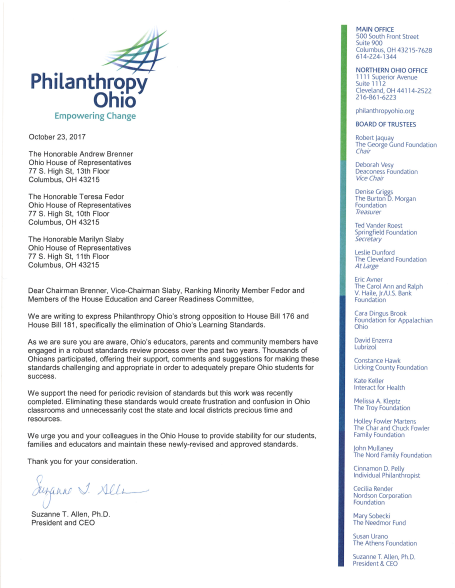
With the Ohio House Education and Career Readiness Committee hearing tomorrow to address school assessments, curricula and teacher evaluations, we wrote Chairman Brenner, Vice-Chairman Slaby and Ranking Minority Member Fedor to express our opposition to House Bill 176 and 181.
Philanthropy Ohio and its Education Initiative specifically oppose the elimination of Ohio’s newly-revised Learning Standards.
The hearing is Tuesday, Oct. 24, at the Ohio Statehouse at 4 p.m.
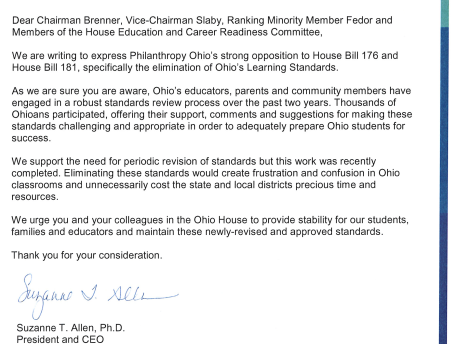
See the full letter letter below.
Claudia Y.W. Herrold
October 23, 2017 at 5:37 pm Philanthropy Ohio Leave a comment
Four philanthropists honored in Cleveland
Earlier this month, four individuals received awards for outstanding achievements in philanthropy. This year is the 13th consecutive year our board of trustees has awarded the Ohio Philanthropy Award, which went to Hank Doll. Read more about the four awards and awardees below.
Innovation Award – Don Ambrose
The Innovation Award honors a philanthropic catalyst – someone who has moved philanthropy forward from an original idea through implementation to results, and the 2017 winner is Don Ambrose.
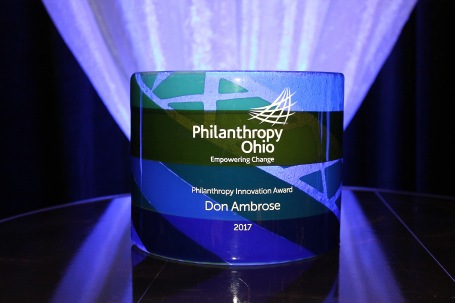 Del Mar Healthcare Inc.’s President Don Ambrose established the Del Mar Social Innovation Award at the Dayton Foundation with the goal of challenging local organizations to think deeply and creatively about how they can serve older adults. Since 2010, the Social Innovation Award has granted more than $2 million to enhance the lives of Greater Dayton’s older adults. The award funds proposals that demonstrate groundbreaking, unique and highly collaborative projects. Without the encouragement of the Del Mar Social Innovation Award, some of these important community projects may have not come to fruition.
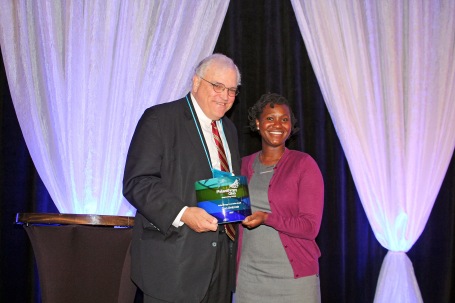
Aiyana Marcus, program officer at The Dayton Foundation, accepted the Innovation Award on Don’s behalf and is pictured with Robert Jaquay, The George Gund Foundation associate director.
Emerging Ohio Philanthropist – Anthony Richardson
The award for an Emerging Ohio Philanthropist honors someone who, regardless of age, has engaged in philanthropy for the first time in the last few years, either as a volunteer or as staff. Nominees should demonstrate exemplary leadership in advancing philanthropy, engagement beyond a single community, creativity in a philanthropic endeavor or project and significant accomplishment over a short period.
The 2017 winner is Anthony Richardson, described by his nominators as someone “who has exemplified the spirit of quiet leadership and innovative approaches to problem solving.” Another nominator noted that he has “emerged as a strong voice and active member of Philanthropy Ohio’s DEI Committee.”
Anthony currently serves as the Civic Affairs and Education Program Officer for The Nord Family Foundation. He is involved with Philanthropy Ohio’s DEI Committee, Education Advisory Committee, Public Policy Committee and the Tax Reform Working Group. He recently was named chair of the Academic Distress Commission for Lorain City Schools, appointed by State Superintendent of Schools Paolo DiMaria.
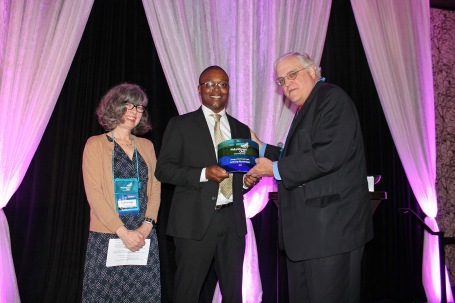
The 2017 Emerging Philanthropist is Tony Richardson (center) pictured with Connie Hawk (left), Licking County Foundation director and Robert Jaquay (right), George Gund Foundation associate director.
Michael G. Shinn Award for Diversity, Equity and Inclusion in Philanthropy – Treye Johnson
The Philanthropy Ohio Board of Trustees created this award after Mike’s death in March 2015. He was the founder of the Shinn Family Foundation and served as secretary of Philanthropy Ohio’s Board of Trustees; he also chaired the board’s Diversity, Equity and Inclusion (DEI) Committee, taking on primary responsibility for guiding Philanthropy Ohio’s efforts in that arena. In addition to the philanthropy he did through the Shinn Family Foundation, Mike was an active and respected community volunteer who gave generously of his time, talent and treasure.
Award nominees should have made outstanding contributions to philanthropy by demonstrating that he or she builds bridges, connecting people dedicated to diversity, equity and inclusion; champions the acceptance, respect and inclusion of all; promotes justice and fairness; forges genuine partnerships with diverse communities; and implements DEI practices in organizational operations, grantmaking and other areas.
Treye Johnson, program officer at The Burton D. Morgan Foundation, is the 2017 winner. He helped bring the Racial Equity Institute’s Groundwater training to Northeast Ohio over the past two years and is planning future activities that follow up on the training. He also coordinated the 2016 Forward Cities national convening that focused on initiatives advancing inclusive entrepreneurship and innovation. Treye has also been a driving force on our Diversity, Equity and Inclusion Committee, bringing his passion and voice to this important work.
One of his nominators described Trey’s impact, saying, “Treye has emerged as a strong voice and active member of Philanthropy Ohio’s Diversity, Equity and Inclusion committee. As I learn of all the things he’s involved with, I continue to be impressed. It’s people like Treye who give me hope for the future. He is passionate, articulate and involved in both his community and philanthropy.”
Deborah Hoover, president and CEO of Burton D. Morgan Foundation, noted, “Treye has served as an inspirational role model in helping to create a ‘culture of inclusion’ in our Northeast Ohio entrepreneurial ecosystem. Trustees and staff are extremely proud of this meaningful recognition of Treye.”
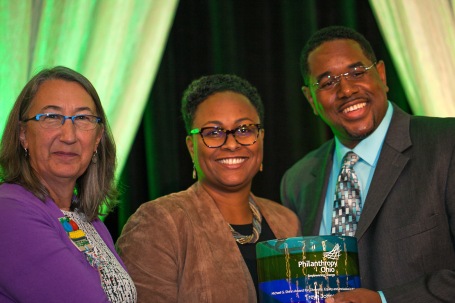
Treye Johnson (right) won the 2017 Michael G. Shinn Award for Diversity, Equity and Inclusion in Philanthropy. He’s pictured with Athens County Foundation Executive Director Susan Urano (left) and Deborah Aubert Thomas, Philanthropy Ohio vice president for programs and learning.
Ohio Philanthropy Award – Hank Doll
The Ohio Philanthropy Award is the award for lifetime achievement. It recognizes an individual or organization for outstanding achievements over a long period, demonstrating long-standing leadership in advancing philanthropy, creativity in responding to societal problems and significant positive impact on philanthropy.
This year’s award winner is Hank Doll of the Doll Family Foundation. Many thoughtful letters extolling Hanks’ accomplishments and passion for philanthropy spoke of his generosity of spirit, his longstanding leadership and his integrity. Hank’s contributions to philanthropy span five decades and have influenced foundations, nonprofit organizations and communities across Ohio. He has worked as an executive, an individual philanthropist, civic leader and advisor. His creation of the “Giving Back Gang” not only inspired giving, but also engaged more than 70 individual philanthropists, generating $275,000 in grants over 15 years. Philanthropy in Ohio would not be the same without Hank.
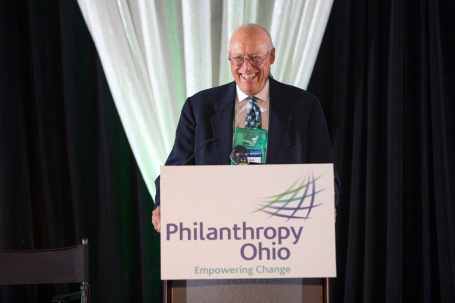
Hank Doll of the Doll Family Foundation won the 2017 Ohio Philanthropy Award.
Congratulations to our 2017 Philanthropy Award winners!

Jessica Howard
October 23, 2017 at 4:29 pm Philanthropy Ohio Leave a comment


 Let's Talk Philanthropy